Pages

About Me

My photo
I am from the Middle East and have lived a number of years in the US, France and the Middle East. After completing my engineering degree I randomly bounced around desk jobs in search for a steady career until, after 10 years, I've finally hit a brick wallI. Frustrated with the professional and social environment around me I decided to go off on a tangent: for a year I'll be on the road trekking all over Eastern/Central Europe and focusing on creative writing, the one thing I seem to find myself in.

I've been writing for a number of years. A few of my works have been published, but I've always been hesitant to call the craft of writing anything more than a hobby. During my journey across Eastern/Central Europe I'll be developing original ideas as well as writing about the places I visit. I'll be publishing my pieces on this blog while looking for other publishing opportunities where I go.

Please feel free to comment away and, if you like what you read, then please sign up to become a follower of my blog (gadget on the right, below the map)!
Showing posts with label Lithuania. Show all posts

Thursday, 14 October 2010

Grutas Parkas (Park of Totalitarianism)

Propaganda Statue
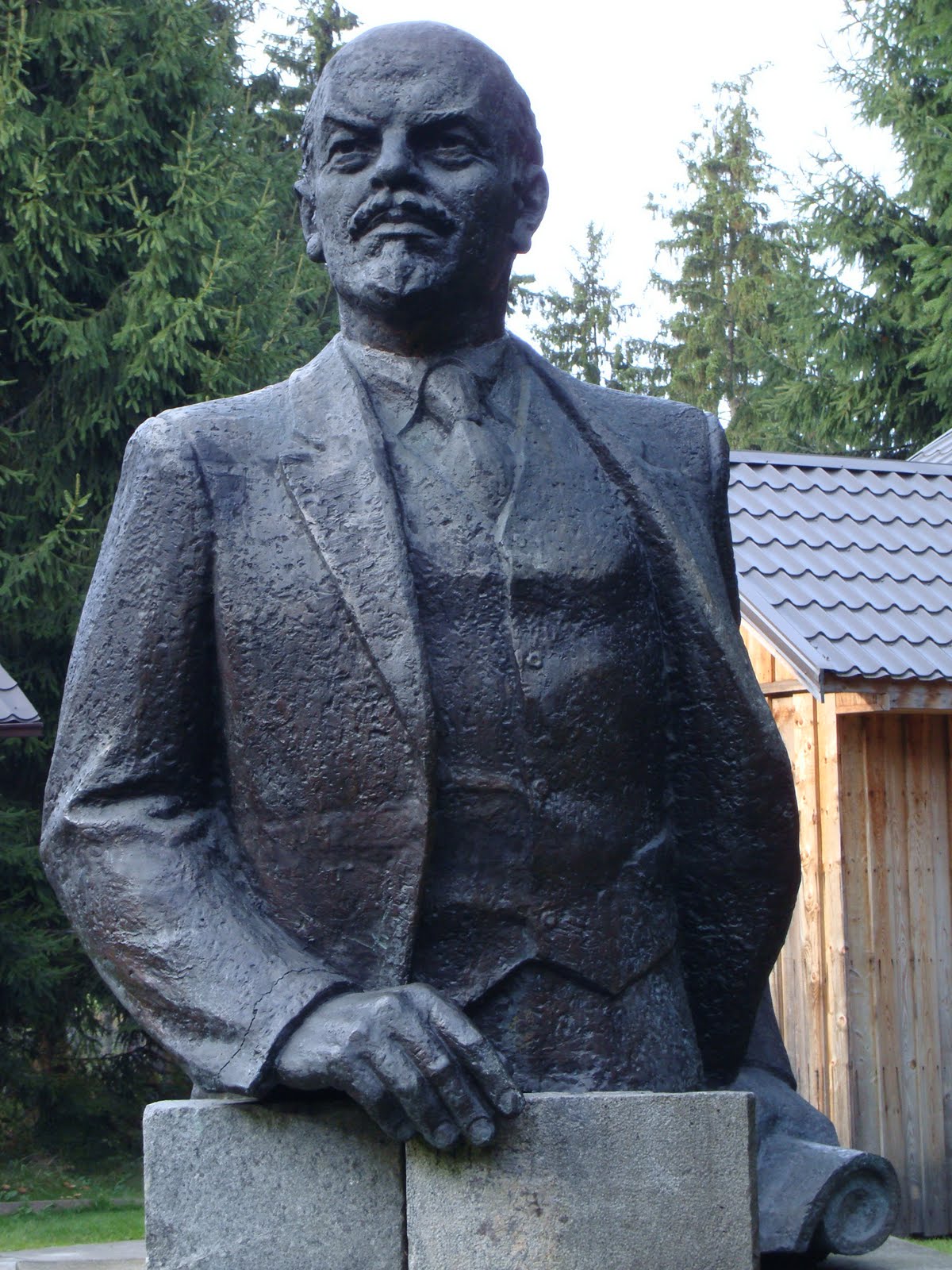
Soon after Lithuania regained its independence from the Soviet Union in 1990 the government started an initiative to erase any existing physical links to Soviet times. So any street named after Lenin, Stalin or any other notable Soviet figure had to be renamed. The same goes for statues of Soviet heroes: they were removed and tossed in storage to be forgotten. Eight year after independence still no one knew what to do with all these statues taking up space in storage. Wanting to know what ideas were out there, the government opened the floor for tenders. 

Important Soviet Figure
Many were sent. The winner was an eccentric millionaire by the name of Vilumas Malinauskas. His idea: create a park in the design of a gulag (watchtowers, barbed wire and wild nature) and stick those statues there. Visitors walk around in this open-air museum and admire Soviet-era statues. Genius? Madness? The idea, given the difficult times under Soviet occupation and the loss of lives fighting for independence, was so controversial that it bordered on madness. Yet Vilumas got the green light (probably because he financed the entire thing himself). The park opened in 2001 and was a runaway hit, becoming immensely popular with locals and foreigners. For his effort and vision, Vilumas Malinauskas even won the Ig Nobel Prize for Peace in 2001! This, mind you, is a parody of the Nobel Prize, for achievements that "first make people laugh, and then make them think."


Gulag Watchtower & Park Walkway
Lenin


Tuesday, 12 October 2010

The Baltic Chain

Vilnius Cathedral
At the end of one of the main thoroughfares in the old town of Vilnius is a cathedral sitting in the corner of a large square. The cathedral is of a gleaming white colour, its building imposing. On top of the main entrance are three statues of figures: two of them are in the background while the centre figure, Saint Helena, stands at the fore. One of her hands holds a large golden cross while the other hand hangs down to the ground, palm open as if inviting people to her. In the spacious square next to the cathedral people sit on the steps and relax, sometimes to study; young people ride their bikes or practice their skateboarding moves. At night I saw people there with telescopes looking up into the sky. 
Stebukla
Right below Saint Helena is a marble slab unlike the others. The slabs around the cathedral are mainly grey and bland, but this is one has Stebukla written in a circle with a star in the centre. People can be seen standing on the slab and turning around clockwise in a full circle, their eyes suddenly turning pensive for an instant then suddenly beaming. They just made a wish and hope that folklore will make it true. But that slab is also a marker of history: on it ended/begun one of the longest human chains formed in history. The date was August 23, 1989. Over one million people held hands for 15 minutes to protest against Soviet occupation. The chain spanned over 600 km and linked three different countries: Lithuania, Latvia and Estonia. Pictures reveal people of all ages, from the elderly to children. There is pride in their eyes and belief in their action. The Soviet empire may retaliate with brutality against this protest, brining about more pain and bloodshed, but the empire is already toppling. Independence is only a push away. 

A group of people finished taking their turn circling clockwise. I approached the slab after they walked away, looked down then in the distance, imagining the chain of people stretching away from me. I carefully stepped on the slab, closed my eyes and, in my mind, reached out in history to take a hand, to take my place in the chain  for freedom of the individual and against oppression from ideology.       


Monday, 11 October 2010

Cepelinai (Zeppelin)

On my last day in Vilnius I finally summoned the courage to try cepelinai - the Lithuanian national dish. If you're wondering why I waited so long, lets just say that I was looking after myself. Actually, I lied. I did try the local cuisine: potatoes topped with crackling. But (to put it in slang terminology) I haven't gone hard-core traditional. Instead, I mainly stuck to sandwiches and western cuisine. Going off on a tangent: pizza and pasta are incredibly popular in Lithuania. The local restaurant chain Cili Pica - the equivalent of Dominoes or Pizza Hut - has branches all over the country and cooks maybe the best pizzas I've ever had...        

So, Lithuanians, back in the day, were farmers. Their meals mainly revolved around bread, dairy products and sometimes meat (mainly pork meat). Cepelinai translates to zeppelin in English. The meal is a massive zeppelin shaped potato filled with some kind of stuffing and served with sauce. Needless to say: it's heavy. I skipped breakfast on that day, knowing that lunch was probably going to be my only meal. Since it takes about 20 minutes to prepare cepilinai I ordered a soup and 50 ml of Utenos dark beer - a cross between Guiness and Kilkenny. This was a big mistake. People with small stomachs, or who are not used to eating big meals, should never order a heavy beverage to wash down a filling meal.

The waiter brought my meal (see picture): two zeppelins filled with meat and covered in sour cream. I finished everything. It was tasty at first. But the experience slowly turned to pain after each bite and each sip of beer. In the end I could not get off my chair. I was comatose with one hand on my stomach, my mouth hanging open and my eyes turned inside my skull. the waiters and other clientèle must be used to this sight as they just let me be. In my mind there flashed the black and white images of the Hindenburg Zeppelin suspended in the air and consumed in flames. Once I regained a sliver of conciousness I settled the bill and managed to walk out of the restaurant. Dragging my feet on the cobbled stones, I made for the B&B - to my bed. But I only made it to my room before collapsing on the wooden floor. With my trembling hand I reached out to the warm blankets and comfortable mattress of my bed. But my strength left me, just like a balloon that got popped. And like that, the lights went off.

The Republic of Uzupis

Republic of Uzupis Sign
During the 1980's, while countries in the Eastern European block were fighting for independence, a group of bohemian artists, drunks, louts and beggars that settled in the district of Uzupis, in the city of Vilnius, decided to declare independence from the state. The government of Lithuania, having more important issues to deal with and, more importantly, recognizing the type of people they're dealing with, just let them be. 

It is, of course, all tongue-and-cheek. Or is it not? Well, there are no formerly defined borders and no guards policing the bridges that lead to the district of Uzupis. But the district, sorry, Republic of Uzupis apparently has, among other things, a national anthem, a flag, a constitution, a president and prime minister. The Republic's headquarters is a bar and its independence day is on April 1. 

Angel of Uzupis
Sadly, the district is not as bohemian as I expected. There are no artists wandering the streets, cheap bottle of red wine in hand, searching for inspiration or 'creating.' The area actually looks very residential and sleepy. However, there is a curious yellow building (apparently the Republic's Ministry of Culture) where all sorts of bizarre artistic creations are taking place. On the day I went to Uzupis a few newly weds and their congregation were there, all formally dressed and taking pictures by the statue of the Angel of Uzupis and in different areas of the district. Thinking about it now it's a shame I didn't talk to anyone in the Republic's headquarters or the Ministry of Culture. 

On a side street, by the statue of the Angel of Uzupis, is a copy of the Republic's constitution translated in different languages and hung next to each other on a long wall. Here I list all 41 points of the constitution that accurately captures the spirit of the founders of the Republic of Uzupis:

Ministry of Culture
Everyone has the right to live by the River Vilnelė, while the River Vilnelė has the right to flow by everyone.

Everyone has the right to hot water, heating in winter and a tiled roof.

Everyone has the right to die, but it is not a duty.

Everyone has the right to make mistakes.
Everyone has the right to individuality.
Everyone has the right to love.
Everyone has the right to be not loved, but not necessarily.
Everyone has the right not to be distinguished and famous.
Everyone has the right to be idle.
Everyone has the right to love and take care of the cat.
Everyone has the right to look after a dog till one or the other dies.
A dog has the right to be a dog.
A cat is not obliged to love its master, but it must help him in difficult times.
Everyone has the right to sometimes be unaware of his duties.
Everyone has the right to be in doubt, but this is not a duty.
Everyone has the right to be happy.
Everyone has the right to be unhappy.
Everyone has the right to be silent.
Everyone has the right to have faith.
No one has the right to use violence.
Everyone has the right to realize his negligibility and magnificence.
Everyone has the right to encroach upon eternity.
Everyone has the right to understand.
Everyone has the right to understand nothing.
Everyone has the right to be of various nationalities.
Everyone has the right to celebrate or not to celebrate his birthday.
Everyone shall remember his name.
Everyone may share what he possesses.
No-one can share what he does not possess.
Everyone has the right to have brothers, sisters and parents.
Everyone is capable of independence.
Everyone is responsible for his freedom.
Everyone has the right to cry.
Everyone has the right to be misunderstood.
No-one has the right to make another person guilty.
Everyone has the right to be personal.
Everyone has the right to have no rights.
Everyone has the right to not be afraid.
Do not defeat.
Do not fight back.
Do not surrender.                            

Long live the Republic of Uzupis

Wednesday, 6 October 2010

Couchsurfing

My trip to Lithuania could have been a lonesome affair if it weren't for the website www.couchsurfing.org. In a nutshell, the idea of this site is quite simple: linking travellers (surfers) with people residing (hosts) in, or people familiar with, the place of interest. This way surfers can get to experience the place they're visiting from a different perspective and hosts get to learn about where surfers come from. And if surfers get along well with their host, well... they can brag about having a friend in that country and maybe give themselves a reason for a repeat visit. It's a win-win situation for both sides. In my case, since there are couchsurfers all over the world, it pretty much means that I can meet people in every country I visit during my journey across Easter Europe.

*

The first couchsurfer I met in Vilnius, Lithuania, is a writer and teaches creative writing. The daughter of Lithuanian parents who immigrated to America, she was raised and educated in New York. Poetry is her passion - and Lithuanian poetry, at that. More than anything, she wanted to translate Lithuanian literary works into English so they can be discovered and be appreciated by a wider audience. When she learnt that Vilnius University was inviting students to study literary translation in the Lithuanian Literature Department, everything became clear: she signed up for the program, packed her bags and left for Vilnius. This was the late 80's - Lithuania was under soviet occupation and officially called the Soviet Socialist Republic of Lithuania. She arrived at a time when nationalist sentiment was taking off. The movement for independence was getting bolder at staging rallies and protests against oppression from the communist regime and demanding independence. The streets of Vilnius at the time were riotous with courage, fear and repression. This couchsurfer, during her one year stay in Vilnius, got involved in the push for independence - especially since she is fluent in both English and Lithuanian. I would have liked to know more about her experiences, but we met on one of her busy days. She was exhausted and my social skills are, sadly, not up to par for keeping people awake and wanting to talk. However, she kept a diary of her all her experiences during those troubled times and she recently published in a book with an absolutely wicked title: Lenin's Head on a Platter. The book is in English and she very kindly offered it to me as a gift, a gesture I very much appreciated.

*                           

My meeting with the second couchsurfer had a disastrous start: I made her wait in the rain for 10 minutes. I'm not often late to a meet, but I must have badly misjudged the distance from my B&B to our meeting point. The poor soul was pacing around impatiently when I got to her. I apologized profusely - nearly falling to my knees - and confessed that I, indeed, am a most wretched creature for making a lady wait in the rain. Once satisfied by my drama she led the way to Music Club Tamsta, a bar that featured a live act on that night: Arlina Orlova. My conversation with the couchsurfer started off very conservatively: on our way to the bar I told her of the things I saw in Lithuania and, at our table in the club, we each talked about our profession in life.

The club has a modern look: its walls and furniture were painted in dark and clashing colors. The stage was right next to our table, as well as a metal stair case leading to a balcony that stretches the entire length of the wall. I felt relaxed and chatty, but our conversation was too broken up by silent pauses. I felt like we needed a good jolt of randomness to formally break the ice. All of a sudden two children ran down the metal stair case and dashed in front of me, shrieking in joy. I slowly leant towards the couchsurfer and, in a trembling voice, whispered: "there are children here." She leaned towards me, her dreamy eyes looking into mine and her smile sarcastic, and whispered: "is it a problem for you?" Ice broken - carpe diem.

*

Oh, and the band was absolutely brilliant! It was a three person act: singer/keyboardist, violinist and guitarist. The music was of the alternative kind and the songs were mostly sad but sung beautifully. The singer, Arlina Orlova, is in her twenties. She's blonde, very white and very skinny, but her voice is haunting and expressive: trembling at times, then pleading only to suddenly tear into a wild frenzy. It was emotional, mesmerizing and a beautiful way to be introduced to the city of Vilnius.   


Monday, 4 October 2010

Hallucinogenic Trip on the West Coast II (Klaipeda)

Where are the people?? The city of Klaipeda looks much too big given the people wandering the streets. It feels like the inhabitants are part of a government project to repopulate the city after it has been beset by the black plague or something equally terrible. Nevertheless, I found a good cafe - Max's Cafe - where I can write and access the internet. I also happened on Friedricho Smukle - a very good and affordable restaurant in a very lively alley. My basic necessities were satisfied and I was comfortable. My routine would be to sit in a cafe in the morning and write, check email, or read; walk out for a bit, grab lunch, then return to the cafe; walk out some more then have dinner. Although my routine kept me somewhat busy, still, I could not get that question out of of my mind: where are the people?? 

So, on my last day in Klaipeda, for my peace of mind, I decided to uncover this mystery. I noticed that quite a few people and cars were coming in to town from the same direction - south of the city - and, so, I headed in that direction on foot. I walked on a tree covered side walk, past small malls, shops in plazas, modern office buildings here and there, but mostly dilapidated apartment buildings with clothes hanging out to dry on balconies. Yet the further I pushed on the more people there were! After about 30 minutes of walking I stopped in front a sign hidden behind trees. Let me rephrase: I stopped cold, like a brick-wall was suddenly dropped down. In front of me was the largest sign I've every seen. The word 'AKROPOLIS' glowed bright red like it was being yelled at my face. It stood in a crowded parking lot, upheld by one massive pillar. Cars poured in the lot and people walked towards a large square-like building. Something about the structure of that building felt eerily familiar. There were large words written on the front and sides. My eyes zoned in one of these words: ZARA. The only ZARA I know is a clothes store and, for the most part, I've only seen it in a... No! 

Yes. I even entered the building just to be sure: it is a mall - The Akropolis Mall. Oh, the horror. Zeus and his wife Danae must be turning red in fury. I walked through the sliding doors and was suddenly transported back to the Middle East. The I'm-so-freaky-looking-I'm-cool people usually found walking the malls back home were (thankfully) not in this picture. No, the people I saw there are hands down more normal and much better looking. But the environment was the same - around me were some of the same brand names I've seen in malls around the world - and the people were doing the same thing: eating, drinking, shopping or just walking around. 

The sight of a mall should have been normal. But having lived for so long in the Arabian Gulf region my mind immediately links malls with the materialistic behaviour of the people from over there. It never occurred to me that a country that is more humble, wealth-wise, can have malls. Quite naive of me, but there it is: I've found the the missing people of Klaipeda. They're shopping in the Akropolis mall.                                       

Friday, 1 October 2010

Hallucinogenic Trip on the West Coast I (Klaipeda)

According to the weather forecast the weekend of September 25-26 was going to be sunny and warm: around 20 Celsius. So I packed my bags, left Siaulai and headed to Klaipeda, on the West coast of Lithuania - to the beach. Quite ironic coming from a person who prefers cloudy days over sunny days. Nonetheless, I made my way. After all, who knows when I'll be in the region again to see the Baltic Sea.  

*

Four hours later I arrived at the Klaipeda train station. My welcoming party was already there waiting for me - she's an acquaintance of a good friend of mine. It's quite serendipitous: my friend met her at a business conference not long ago and, afterwards, has been meaning to put together a joint project that would benefit both organizations they work for. The project is still in the works, but I beat my friend to Lithuania. It was a hectic day for my welcoming party, I quickly jumped in her car, she gave some bearings around town and drove me to the place where I'll be staying at. Once I got checked in she said: "we'll talk tomorrow about doing lunch!" and left. 

I wasted not time: I dropped my backpack and headed out towards the coast. Klaipeda is a port town, people usually get to the beach by ferry to the Curonian Spit - a long and thin peninsula just off the coast. This peninsula is not a barren piece of land. Far from it, it's actually a national park. From the ferry port all you see is a line of tall trees that runs parallel the coast. Between the port and the peninsula is the Curonian Lagoon while the Baltic Sea is on the other side of the peninsula, hidden by those tall trees. The ferry trip was brief. On the Curonian Spit I walked on a path locked by trees on both sides. Green color and the smell of bark were all around. Then the trees ended. I squinted, shielded my eyes with my hand and looked up: I could see the sky - washed out blue with no cloud in sight. In front of me was a large sand dune. On top of the dune my eyes were suddenly washed with the deep blue color of the Baltic Sea. It moved and breathed like a dream - as if I absorbed some kind of hallucinogenic substance during my short walk across the national park and the sight of the Baltic Sea was the product of my mind gone high. Adding to this drug-free trip is the bright white sand. It's not soft like that on the beaches of the countries I've been to in Middle East. The sand here is more compact and crunches under your shoe, like when walking on snow. 

People were swimming; children were playing in the sea; a group played volleyball while others just lounged on the sand. I walked near the water with only a t-shirt on. A few bikers rode passed me and I turned around to stare at them. Not only have I never seen people ride their bikes on a beach but I could swear that their wheels hovered in the air by just an inch!                                 


Tuesday, 28 September 2010

Hill of Crosses (Siaulai)

Siaulai from Hotel Room
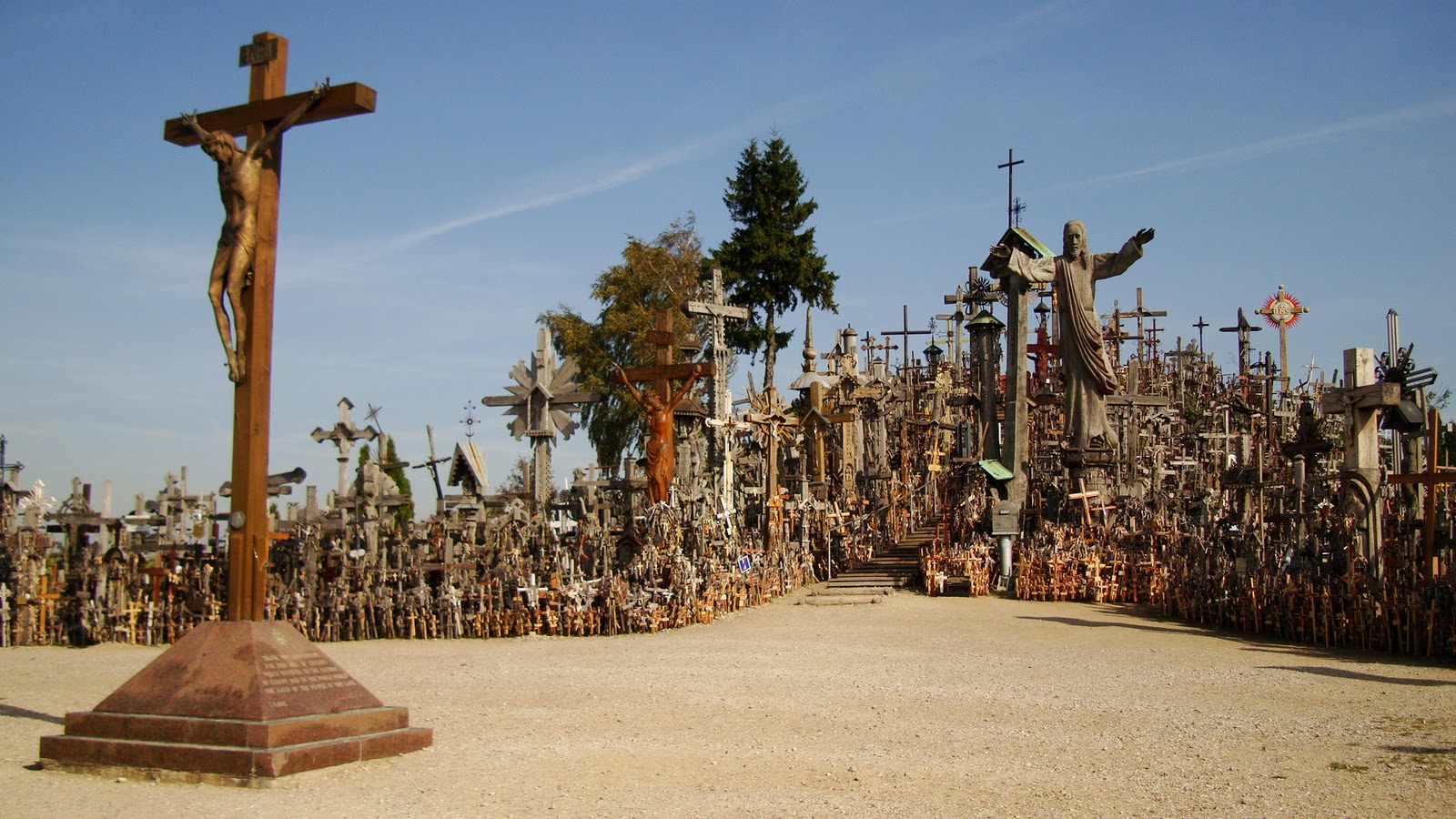
 Siaulai (pronounced shaulai) is a city in the centre-northern part of Lithuania, very close to Ryga, the capital of Latvia. While slowly walking to my hotel from the train station, my back breaking from the weight of my backpack, the first thing I noticed was the large number of youths in the city. I don't know why, but Siaulai gave me the feel of those suburban towns in the US where young guys huddle together over smokes or booze to talk big about how they're going to escape from town in their mother's car and never return. The city's only got one main pedestrian street where all the restaurants, cafes, bars and clubs are. There doesn't seem to be much beyond that. The only picture I took of the city was from my hotel room, on the top floor of the Siaulai Hotel - a soviet era concrete block of a building. Apparently it has recently been renovated, but the soviet spirit still remains. The rooms are comfortable, but austere and very functional; The furniture and paint are outdated and dull; at breakfast a hotel staff chases you around asking for you 'breakfast ticket!' But the hotel was such a welcoming sight after having stayed in a wooden cottage for two days - at last, wi-fi in my room and the facility to do laundry! By the way, the laundromat concept does not exist in Lithuania. All homes have washing machines. If not, then private companies will pick up dirty clothes from your home and return the lot on the same day or the next. If neither is available, well... Lithuania is rich with rivers. Seems I went off on a tangent... Ah, here's my old line of thought - so, why did I include Siaulai on my itinerary? Quite simply because of a very interesting sight called the 'Hill of Crosses.' Its title is self-explanatory: it is a hill covered with crosses. But it's the significance of the sight and how that significance changed over time that makes the place interesting.    

Hill of Crosses
It was a sunny day when I made my way to the Hill of Crosses. Rather than take the bus I decided I'd rent a bike and cycle all the way there (about 12 km). The city soon ended and gave way to green fields and tall trees. After about 45 minutes of cycling up and down hills, ingesting a few of those small flies that have nothing better to do but hover in the air on your cycling path, I finally made it to the sight. The hill stood near a winding river and tall trees. There was a gentle breeze blowing, the chime of metal crosses rang softly in the air. When I arrived there was a Polish congregation in front of the hill reciting something that sounded like a liturgy.      

Hill of Crosses
Although it isn't known exactly when the practice of planting these crosses first started and why on that particular hill, it is believed that people started out of religious reasons sometime during the 18th century. The political climate then changed: in the late 18th century Lithuania became part of the Russian empire. Lithuanians then started putting up crosses on the hill in remembrance of rebels who lost their lives fighting for independence. Independence was won, then lost to the Germans first during WWII then to the USSR in 1944. During Soviet occupation, from 1944-1990, Lithuanians planted crosses on the hill as a sign of their national identity and to protest against soviet occupation. The soviets bulldozed the sight a number of times, but Lithuanians kept on coming back to plant even more crosses.

Hill of Crosses
According to Wikipedia the number of crosses was estimated at 55,000 in the year 1990. There probably are over hundreds of thousands of them by now. After walking up, down and around the hill I sat down on a nearby bench to eat lunch. A small number of tourists walked by me, mostly belonging to some tour. From their language I made out Germans, Russians, English and even a Japanese couple. It's like an open air church - they look at the hill in solemn admiration. This sight does not attract droves of tourist. The people that make their way there are usually on pilgrimage, to listen to the chime of crosses and remember. 

Friday, 24 September 2010

A Soviet in the Grocery Store!

One of the things I said I'd do during my trip in Eastern Europe is to learn a few words from the local language. Not only will it make it easier to communicate with others but it also facilitates the immersion intova foreign culture. I picked the basics: 'Hello', 'good day', 'thank you', 'please', 'I don't speak Lithuanina', 'do you speak English?', 'toilets', 'coffee', 'wine', 'beer' and so on. So far it's been working well - people seem to be happy that I've actually made an effort to learn a few words from their language.

Confident with my grasp of what few Lithuanian words I know (it's only my second day in Vilnius) and armed with my Thomas Cook book on Eastern European languages I walked into a grocery to buy food. On my list is bread, sausage and cheese. Inside the grocery store there are two counters: one to my right and one to my left. I first approached the one on the right. Prashow (please) I say and pointed to sausage and cheese. The kind old lady put the food in a bag, rang me up at the till then handed the bag to me. Success! I now turned to the counter on my left. Prashow (please) I say. The old woman looked at me with cold eyes like I've insulted her mother. Roughly in her 60's I'd say and probably one of those nostalgic for the good-old Soviet years. She'd fit perfectly well back in the soviet days when stores were almost empty and the people working there had the power to help you, or not. There probably is a picture of Stalin in her bedroom, hung on the wall opposite her bed so he'd be the first thing she sees every morning. But her eyes spoke to me. They spoke in English. Well, not quite... They spoke in an accent so thick in Russian that there was no English left. But I made out the sentence - the only English sentence she ever learned. It was thrown at my face in disgust: Mother F***. But it sounded more like: "Mo-Ther-F***!".  I swallowed my saliva and timidly pointed at the black bread. She grabbed the wrong one. Ne (no), I said, and pointed to the on her left. She got all pissed off, grabbed it and rang me up at the till: 3.30 Lita. I took out all the coins in my pocket and counted them. It took a few seconds - there were a lot of coins (there are coins for 1,2 and 5 Lita. In addition to that, each Lita is divided into 100 Centai!). The total came out to less than 3 Lita. She kept on staring at me with that cold and impatient look. I put the coins back in my pocket and pulled out my wallet. All those coins in my pocket suddenly came back out again and fell to the ground, their chime echoing throughout the store. I remained as calm as possible and bent over to picked up the coins one by one. A kind lady even went out of her way to stoop down and point out a coin that fell behind someone's shoe, her finger nearly touching the coin. Trying to brush off this embarrassing situation I shrugged and smiled at the lady behind the counter. "Mo-Ther-F***!" her eyes said to me before taking the note in my hand and handing me my change and bread. 

Slavic witch, I should have beaten you with my sausage...     

Thursday, 23 September 2010

Romain Gary

I'm in Vilnius, outside the old town. Up the street is a Russian orthodox church with bright green onion domes. Down the street, someone is climbing out of a big dumpster. The old building behind me is fenced off with wooden planks - now canvas for graffiti. In front of me is another old and derelict building. On the lower left corner is a bronze plaque that states (roughly translated from French to English):

The French writer and diplomat 
Romain Gary 
(Vilnius 1914 - Paris 1980)
Lived from 1917 to 1923 in this house 
That he mentions in his novel 
"La Promesse de L'aube"  (The Promise of Dawn)

Romain Gary was raised by his mother, a strong and eccentric lady with the singular objective to leave Lithuania with her son and move to France. And by eccentric I mean the type that would have no problems dressing up her boy in tattered clothes and putting on a grand act just to sway the situation her way. She started off as an actress, then became a tailor of some sort and later did odd jobs just to put food on the table. However difficult the situation she always prepared three meals a day for Romain, even at her dietary expense. The book "La Promess de L'aube" gave me the impression of her as a mother who, even as she pushed forward to paving a better future, made it a rule to everyday spend time with her son. Among other things, she taught him how to speak French, drilled him in the mannerisms of aristocrats and encouraged in him the wiles of a dandy - a real man, to her, is one who can wrap a lady tight around his finger. She took for granted that her son would have a bright future. This was not a matter of clairvoyancy, but justice: for, in her mind, something had to pay off after such a difficult life. In dramatic gestures and in a booming voice that only a stage actor can muster she would tell the child Romain how, in the future, he would serve honourably in the French army, become a respected diplomat and a great artist. 

And so he did - just as his mother said. Romain Gary served in the Free French Air Force during WWII, then became a diplomat and a famous writer. Romain even dressed in the 'English' style, as his mother fancied. As a writer, among his long list of achievements is to have written the screenplay for the 1962 American WWII film The Longest Day and to have won the Goncourt - the prestigious literary prize in France - twice. Authors can only win this award once. But Romain Gary, after winning the prize, completely changed his writing style and wrote under the pseudonym Emile Ajar to win the prize again! Only from a posthumous letter did it become known that Emile Ajar and Romain Gary are one and the same.

His mother didn't live to see his success - she died only a few years before Romain returned with his fellow soldiers to a liberated France. And he only found out of her passing when he returned home, all clad in his military uniform. Years later, after a long and successful career, Romain Gary found it difficult to accept the weakness and degradation of his body brought on by age. I imagine he was haunted by the void of a strong female presence in his life, of memories from the war or of all the emotional loss he suffered from the currents of time. He drifted in and out of depression for a long time until, at 66 years of age, he took his own life by gunshot.

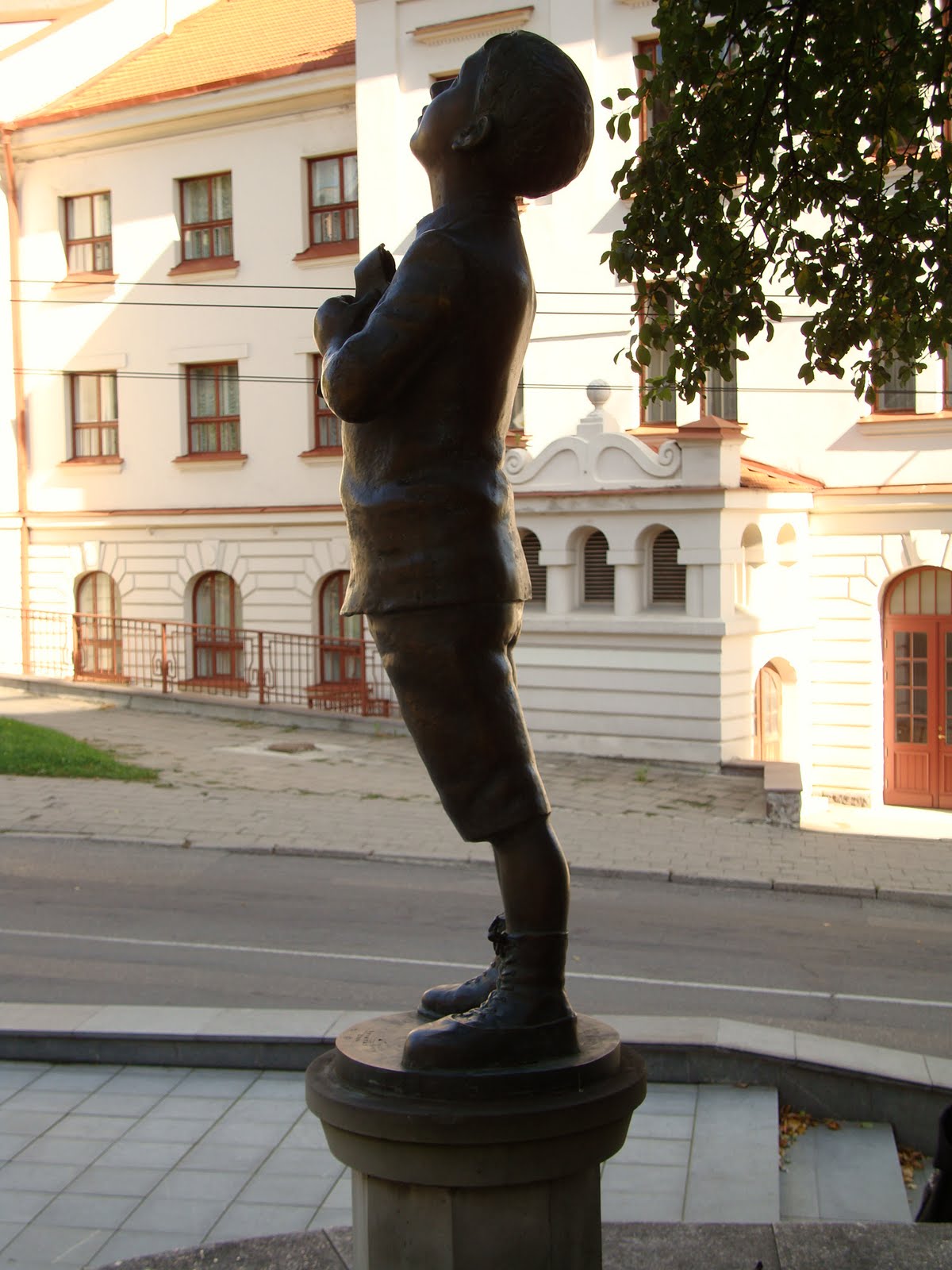
A friend of mine introduced me to Romain Gary a few years ago. It dawns on me that I would never have met my friend and, therefore, not have known of this author if I hadn't lived a part of my life in France. Today I'm in Vilnius, Lithuania, standing in front of the house Romain Gary lived in. Down the road, on the street corner, is a small statue of the author as a boy. The statue shows him looking up at the sky and holding a shoe close to his chest, capturing a scene from his childhood when he ate one of his shoes to impress a girl he fancied. I, too, like to remember Romain that way.      


WTF! (Vilnius, Lithuania)

If it's not clear from the picture, the sign on the car door says:

Abu Dhabi
Abdu Dhabi Desert Challenge 2010 


Monday, 20 September 2010

A Look at Where I'm at in Vilnius


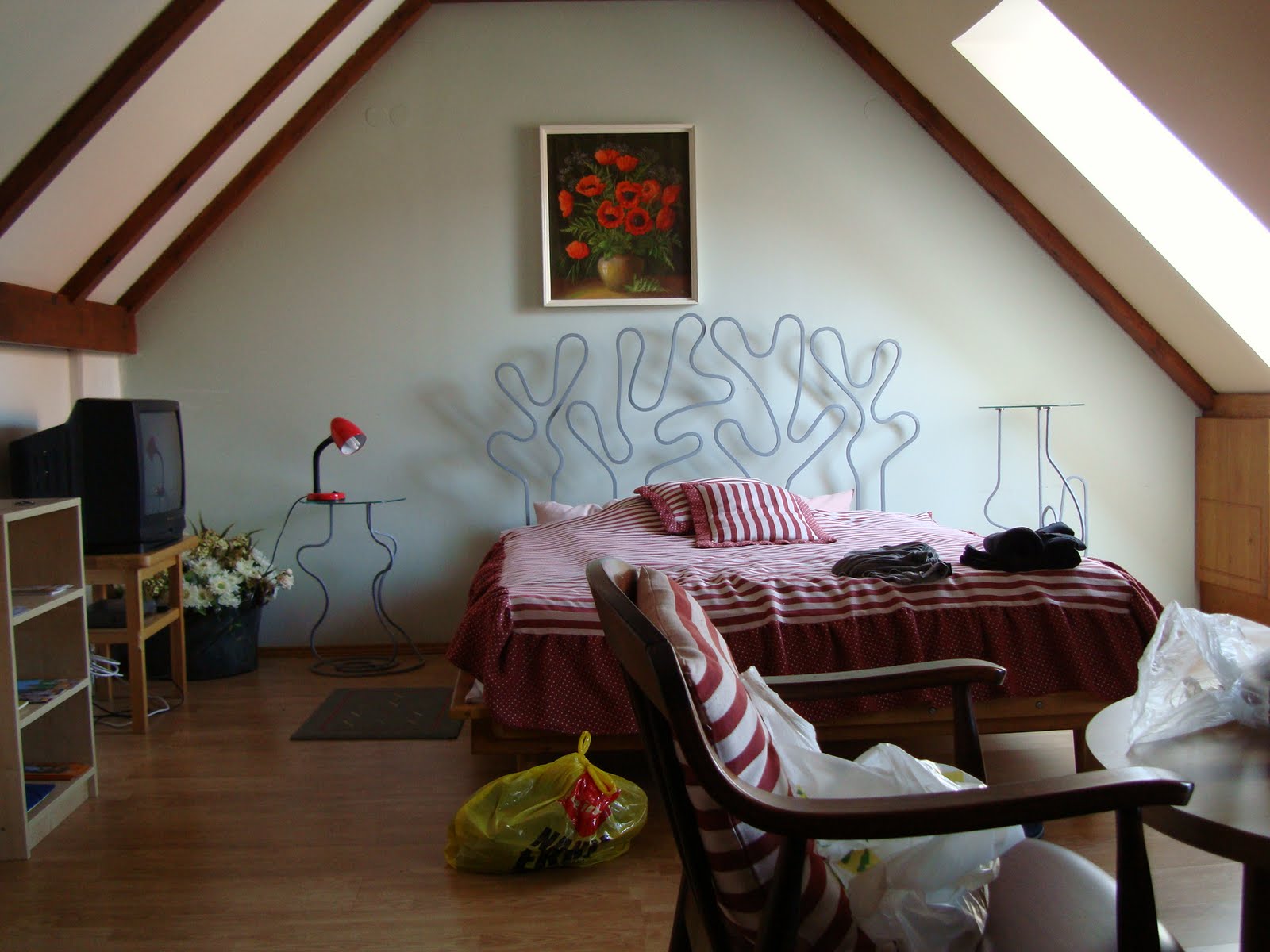
Here are a couple of photos of my room in the attic. Aside from that one blind by my bed I cannot close, the room is very comfortable. It gets cold, though, at night and early in the morning - the temperature these days ranges between 15 - 5 C. Going to bed and taking a shower is starting to be a relatively painful affair. It's been over 10 years since I've lived in a place where there are bad winters (the state of Iowa in the U.S.A being the last). I need to grow back my winter skin. The sun has been out for the last two days, but before that it was mostly a rainy affair. On the round table, sitting out in the cold, is the breakfast of champions: sausage, cheese, apples, bread and honey. 

The photo where the walls are painted with graffiti shows the street my bed and breakfast is on. Graffiti in Vilnius seems to be as prevalent as historical sights. You'll see it on derelict buildings, parks, modern buildings and even on churches. Hardly Banksy, the style of graffiti is more from the 'hood'. The fellow who picked me up from the airport shrugged his shoulders when I asked him about all the graffiti. Sometime back, he said, the government sent people to paint over the graffiti on that wall (the one in my picture). But a few days later the wall got defaced again. Even the vacancy sign outside the B&B I'm staying in got sprayed one night!

Zappa!!

In a run-down neighbourhood outside the city centre, sitting on a metal pole in a small parking lot  is one of the main reasons why I chose to visit Lithuania: the bust of Frank Zappa!! Yes, father-of-Moon-Unit Zappa!! This country can boast to be the first to erect a monument of the American rock & roll legend. Wondering what the connection is between Zappa and Lithuania? There is none whatsoever. According to the In Your Pocket Guide for Vilnius (August-November 2010) this piece of art was commissioned by a student and created by an octogenarian sculptor who once produced effigies of Lenin and other notable Soviet figures. If this isn't the definition of random, then I'm dunking my head in my toilet bowl tonight.

Sunday, 19 September 2010

Sept 15: Latvia to Lithuania

We landed in Riga, Latvia. It's around 6 pm; my flight to Vilnius, Lithuania boards at 7:45 pm. I'm at a cafe, perhaps in the duty free section of the airport. All the tables are taken, so I picked a spot on the counter overlooking the runway. The bitter smell of coffee in the air makes me feel all lazy and mellow. Two airBaltic planes are parked in front of me - the green color of their tail matches the color of  the large patch of grass behind them. Scatterred on the runway are puddles of water - leftover from rain that fell earlier. Beyond the planes are trees - maybe pine. There are hundreds of them - all tall, thin and shadowy as the sun sets behind them. Overhead, thin clouds rush over the airport like cars driving on a freeway. 

In the cafe, we're all waiting. Some are slumped on their chair or couch while others are gazing at their laptop monitors. Some are enjoying their cigarette while the rest are either looking into space, reading a something or talking to someone.  Next to me is a lady - middle aged and blonde. Her black sun glasses matches her shirt and shoes. She sighs, picks herself up, drinks coffee then leans on the counter. She looks at her watch, stares at the trees in the distance, sighs again, drinks some more coffee and leans back on her chair. I drank my coffee, connected to the 3G network on my phone and went through the routine: update location on Google maps, check for new emails: more pictures/videos of my cousin's baby boy; reminders of bills to pay - mental note: check balance in account before paying; an acquaintance in Lithuania finally replied - we're getting nearer to scheduling a meet when I visit the city of Klaipeda; a couch surfer in Vilnius confirmed a meet this Thursday...  I must have been online for 10-15 minutes. When I looked up from my phone the blonde lady was no longer there. Sitting on her side of the counter was a mug, a plate with cake crumbs and a small bottle of Evian. The bottle sat on the edge of the counter near her tall chair. She left it behind still full, its water capturing the golden light from the setting sun.

*

It's 8:45 pm and we're still on the runaway in Latvia: the bloody plane has a 'technical' problem. Our original arrival time in Vilnius was 9:05 pm! I hope my airport pick up hasn't up and went. The delay wasn't bad, though. I made the acquaintance of the person sitting next to me and our conversation made time fly until we took off and until we finally landed in Vilnius. About how we met: I must admit that it did not happen out of an initiative from my part. I sat in the middle seat on one side of the walkway while he sat in the aisle seat on the other side of the walkway. The seats to my right and left were still free when all passengers were on board while he sat next to two people. He asked if I didn't mind he sit in the aisle on my side.... on the condition that I move to the window seat. The man wants his personal space - I completely understand. As a result, we got talking: from cloud computing to couch surfing and frank zappa. My acquaintance was on a short business trip and had a presentation to give the next day at a conference on internet governance. I hope that went well for him - I took his business card and promised to drop him an email.

To my surprise the airport pick up was still there waiting for me! He was a young man - tall, lanky and in dark clothes. He and his brother manage the B&B I'm staying in. I apologized for the delay and thanked him for his patience, especially for saving me from being ripped off by a taxi. It was around 10 pm and the streets of Vilnius were pretty much deserted. The drive in his BMW was smooth. He drove into a narrow street wide enough for one car, opened the gates to the B&B and pulled into a cobblestoned courtyard. After taking a copy of my passport the young lad showed me to my room. We walked out of the reception and into the courtyard, up a set of stairs, through a couple of doors and up some more stairs until we reached my room in the attic. He opened the door and turned on the lights: queen size bed, sofa, small round table + 2 chairs, chest of drawers, large cupboard, TV, stereo and a private bathroom. Some kind of backpacker I am...